
Why Is the Prostate Important for Men’s Health?
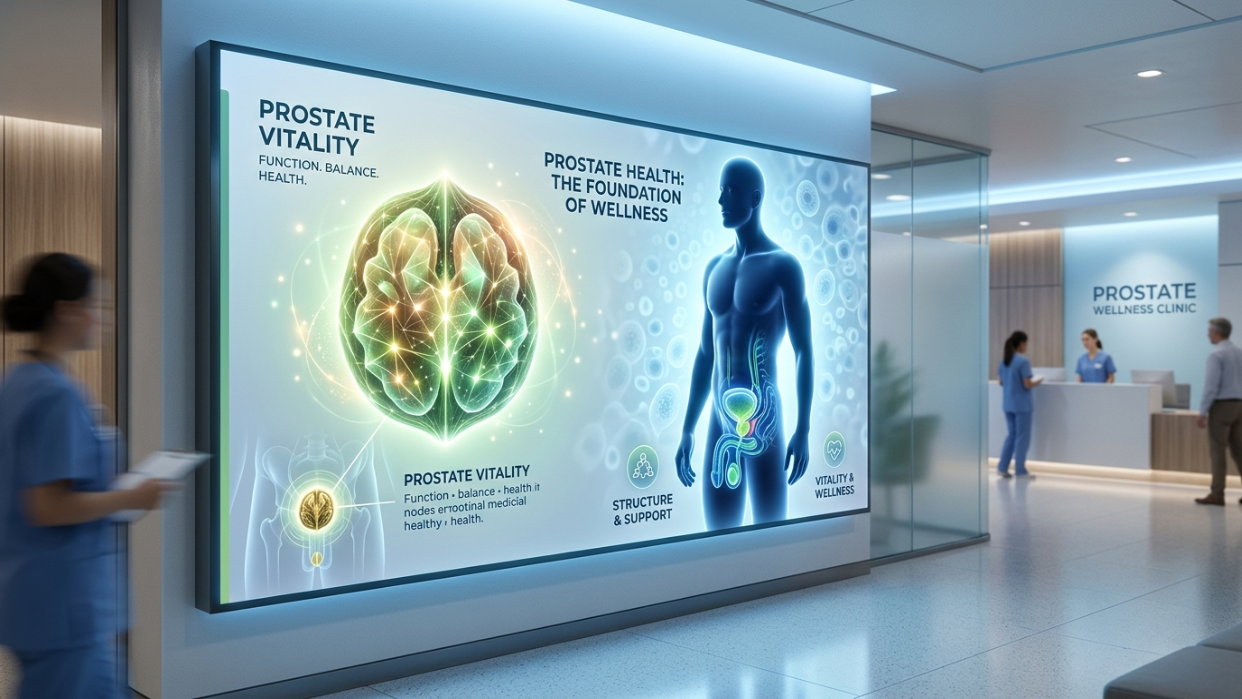
We rarely talk about things that work fine. Your car engine stays out of mind until it makes a weird knocking sound. Your home plumbing is invisible until a pipe leaks. For most guys, a small gland buried deep in the pelvis operates the exact same way. It runs its own quiet corporate operation for decades without sending a single memo.
Then, things slow down. Maybe your sleep gets broken up. Maybe a long flight feels way more stressful than it used to. Suddenly, understanding the core prostate function isn’t just a clinical curiosity. It becomes a mandatory manual for keeping your daily independence intact.
So, why exactly does this walnut-sized anchor hold so much sway over your comfort? Let’s strip away the generic health brochure fluff and look at the mechanical reality of what this gland does, why it rebels, and how to stay ahead of it.
The Biological Engine Below the Surface
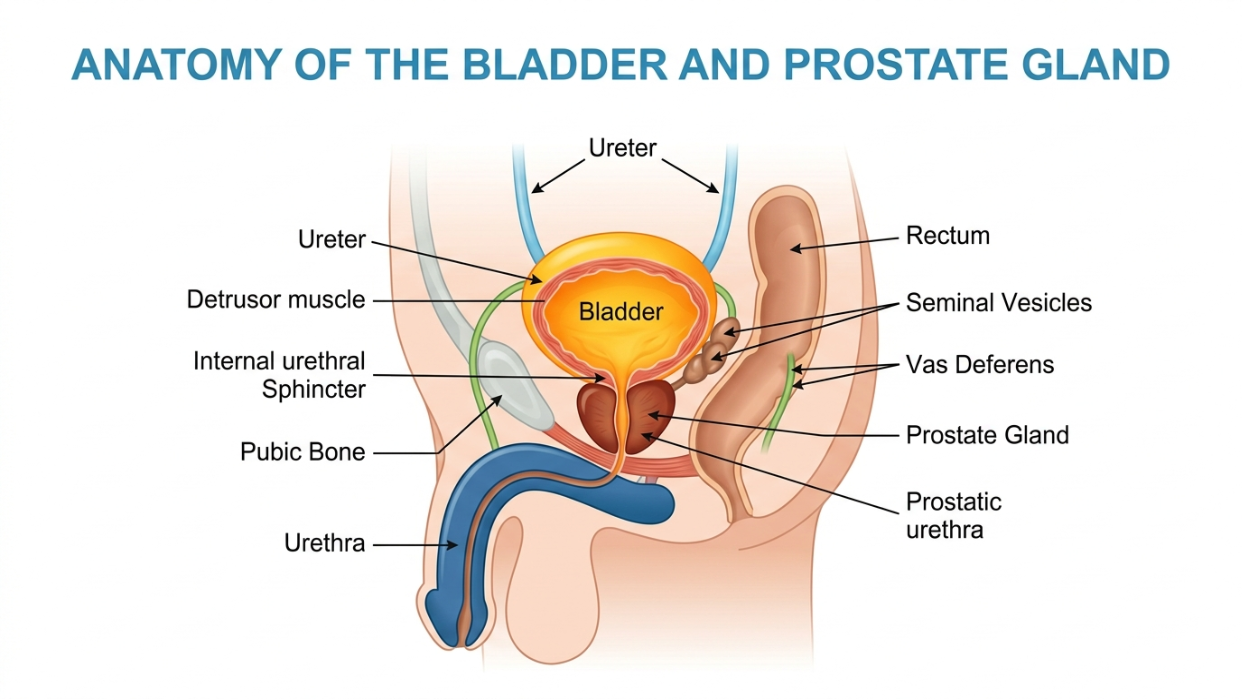
To understand the body, you have to look at how it’s wired. The central prostate function isn’t actually urinary, even though a malfunctioning gland will completely ruin your bathroom habits. It belongs strictly to reproduction. It manufactures a highly specialized fluid that serves as the life-support vehicle for sperm. Without it, male fertility fundamentally stops working.
But the real trick is how it acts as a dual-purpose muscular valve. When you sleep or go about your day, it keeps things locked down. During specific moments, it contracts sharply to clear out paths while sealing off the bladder entirely. It’s a tiny, high-stakes intersection where nothing is allowed to mix.
A quick perspective check: Every single guy shares this anatomy. The gland sits right beneath your bladder, wrapped around the exit pipe. It’s not a design flaw; it’s just tight engineering. When it’s healthy, you don’t even know it’s there.
Why This Gland Dictates Your Routine
When this system functions smoothly, life is beautifully predictable. You sit through a double-feature movie. You sleep straight through to your alarm clock. You pull over at rest stops because you want a snack, not because your body is forcing your hand.
The moment that tissue gets inflamed, tight, or swollen, that autonomy disappears. Because the main drainage line runs right through the heart of the gland, any internal pressure instantly narrows the path. It turns a simple bodily function into a frustrating chore marked by a weak stream, multiple false starts, and constant urgency.
Real Feedback From the Field
“I ignored the slow changes for three years. Thought it was just part of hitting my late fifties. Once I focused on circulation, walking daily, and watching what I drank before bed, my whole routine leveled out.” — Gregory K., 59
The Aging Shift: When Space Gets Tight
Here is the biological quirk: most parts of your body find their final size in early adulthood and stay there. The prostate refuses that rule. It experiences a slow, continuous cell expansion as you cross into your forties and fifties. Doctors call this Benign Prostatic Hyperplasia—or BPH for short.
Don’t panic over the long name. Benign means it’s not a malignant threat; it’s just physical crowding. But because the surrounding bone and tissue won’t move out of the way, the expanding gland can only squeeze inward, narrowing the internal channel.
Decisions That Support the Plumbing
- Leaning into cooked red fruits (rich in natural lycopene).
- Standing up to stretch every hour you spend at a desk.
- Tracking your baseline metrics early with simple checkups.
- Front-loading your total fluid intake before sunset.
Decisions That Stress the System
- Drinking multiple dark beers or strong coffees late at night.
- Staying completely sedentary for days on end.
- Hoping a stuttering flow will magically fix itself.
- Letting elevated stress levels compress your breathing.
Daily Habits Your System Needs
You can’t change your family tree, and you can’t fake your birth certificate. What you can do is adjust the daily micro-decisions that either fuel or soothe internal inflammation. Over a long timeline, those choices compound massively.
- Upgrade your fat sources: Drop the heavy, oxidized vegetable oils. Lean heavily into rich omega-3 sources like fresh fish, cracked walnuts, and cold-pressed olive oil to support smooth tissue health.
- Use heat to unlock nutrients: Raw tomatoes are fine, but cooked or stewed tomatoes are gold mines. The heat breaks open the plant walls, releasing massive amounts of lycopene directly to your system.
- Enforce a fluid boundary: Drink clean water constantly throughout the morning and afternoon. Once dinner ends, wrap it up. Let your bladder empty out completely before your head hits the pillow.
- Get off the pelvic floor: Sitting for eight straight hours pools stress and circulation in all the wrong places. Get a standing desk, walk around the block, just keep things moving.
Answers to the Questions Guys Skip
Conclusion
At the end of the day, understanding your body isn’t about looking for complications—it’s about staying out of the defensive zone. You don’t wait for your car’s transmission to fail before checking the fluid levels. Your pelvic floor deserves that exact same level of preventative respect. Watch the subtle shifts, build clean daily habits, and keep an open line with your doctor so you can continue moving through your years completely unhindered.