
Evening Routine For Better Sleep
Evening Routine For Better Sleep: Your Blueprint for Rest
Think about how you end your day. Do you rush around finishing chores, watch a stressful news broadcast, check your email one last time, and then expect your brain to instantly shut off the moment your head hits the pillow? As we reach our 40s, 50s, and beyond, our nervous systems require a much longer “runway” to safely land into deep rest. The secret to waking up refreshed is not found in a magic pill; it is found in building a consistent, calming evening routine for sleep. Let us explore how structuring your final hours of the day can naturally cue your body that it is time to recharge.
What Is an Evening Routine for Sleep?
A dedicated evening routine for sleep is a specific sequence of relaxing habits performed in the exact same order every night before bed. It acts as a psychological and biological bridge between the high stress of the daytime and the deep relaxation needed for the nighttime.
Just like we build soothing bedtime routines for toddlers to help them wind down, mature adults need these predictable cues even more. By repeating the same gentle activities, you condition your brain to subconsciously associate these habits with the release of melatonin, your body’s natural sleep hormone.

Main Causes of Evening Restlessness
If you constantly struggle to fall asleep, your current evening habits are likely keeping your nervous system trapped in a “fight or flight” state. Common routine disruptors include:
- Late-Night Productivity: Trying to pay bills, plan complex schedules, or clean the house vigorously right before bed spikes cortisol (the stress hormone).
- Inconsistent Bedtimes: Going to bed at 10:00 PM on weekdays and 1:00 AM on weekends severely confuses your internal biological clock.
- Overstimulation: Watching action-packed television shows or scrolling through endless social media feeds provides too much dopamine and blue light, blocking natural sleep signals.
Common Symptoms of a Broken Routine
How do you know if your pre-bed habits need an overhaul? Look out for these classic signs of poor sleep hygiene:
- Feeling physically exhausted all day, but suddenly feeling “wired” and anxious the moment you get into bed.
- Taking 45 minutes or longer to finally drift off to sleep.
- Experiencing a racing mind filled with racing thoughts, to-do lists, and worries from the day.
- Waking up with tense jaw muscles or a stiff neck from failing to physically relax before sleeping.
Risk Factors for Mature Adults
For adults over 40, ignoring the need for an evening wind-down carries higher risks. Natural age-related declines in melatonin make it inherently harder to fall asleep. When you add hormonal shifts (like menopause or dropping testosterone) and the physical aches of aging joints, jumping straight into bed without relaxing first almost guarantees a fragmented, frustrating night of tossing and turning.
The Ideal Evening Routine for Sleep
Building a successful routine does not have to be complicated. The goal is to gradually lower your heart rate, drop your body temperature, and quiet your mind. Here is a highly effective, doctor-recommended timeline you can adapt to your own schedule (assuming a 10:30 PM bedtime):
| Time | The Action Step | Why It Works |
|---|---|---|
| 8:30 PM | The Digital Sunset | Turning off screens stops blue light from suppressing your natural melatonin production. |
| 9:00 PM | The Brain Dump | Writing down tomorrow’s tasks on paper physically removes anxiety from your racing mind. |
| 9:30 PM | Warm Bath or Stretching | Relaxes aging joints and triggers a core body temperature drop to signal sleepiness. |
| 10:00 PM | Quiet Dim-Light Activity | Reading a book or listening to soft music conditions the brain for immediate rest. |
Step 1: Enforce the Digital Sunset
The most important step of any evening routine for sleep is disconnecting from technology. Turn off your smartphone, tablet, and television at least 60 to 90 minutes before bed. If you absolutely must look at a screen, ensure you are wearing high-quality blue-light-blocking glasses to protect your eyes.
Step 2: Prepare Your Sleep Environment
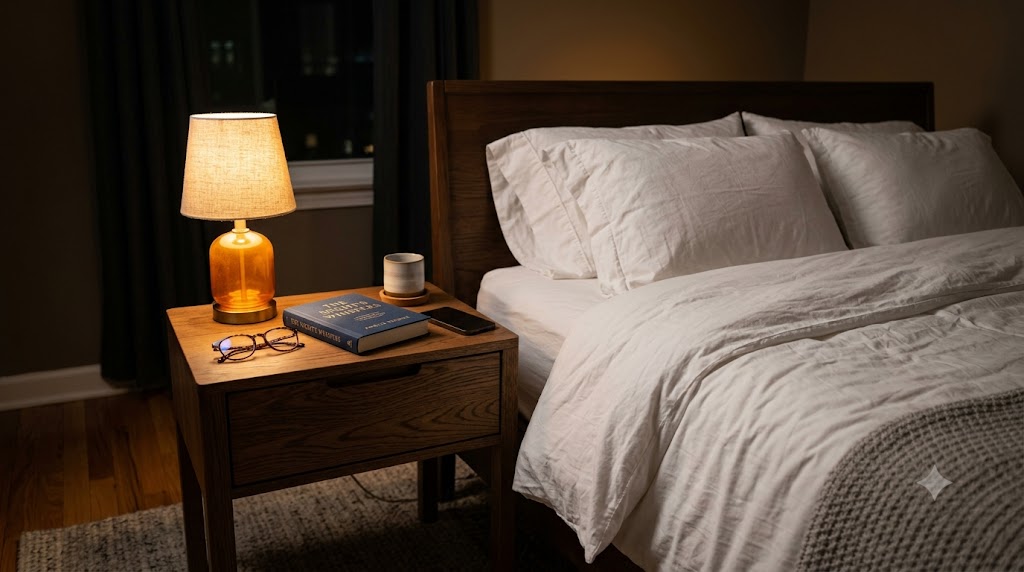
Use your wind-down time to set the stage. Turn down the thermostat to a cool 65°F (18°C). Dim the main overhead lights and switch to warm, amber-toned table lamps. A dark, cool room is biologically required for you to transition into deep, restorative sleep.
When To Seek Medical Advice
If you commit to a relaxing, consistent evening routine for a full month but still find yourself staring at the ceiling for hours, it is time to consult a healthcare provider. While good habits can cure minor insomnia, they cannot fix clinical sleep disorders. Persistent issues could be a sign of sleep apnea, restless legs syndrome, or chronic anxiety that requires professional medical support.
Natural Support For Better Sleep
In addition to optimizing your bedroom and establishing a soothing evening ritual, many individuals find that natural dietary support helps signal to the body that it is time to rest. This might include drinking a warm cup of caffeine-free herbal tea, practicing gentle stretching, or utilizing natural targeted formulations.
For those looking for an extra layer of consistency, high-quality botanical and mineral blends can be a practical option to explore alongside behavioral changes. Products like Sleep Revive are designed to complement healthy lifestyle habits by providing a blend of traditional ingredients aimed at supporting overall relaxation. When choosing any supplement, it is always best to review the ingredients with a healthcare provider to ensure it aligns safely with your personal health profile.
Frequently Asked Questions
What should I drink before bed as part of my routine?
It is best to avoid alcohol and caffeine entirely in the evening. Instead, incorporate a warm, caffeine-free beverage into your routine. Chamomile tea, valerian root tea, or a small glass of warm milk (which contains tryptophan) are excellent choices that naturally promote relaxation without disrupting your sleep cycles.
Can I exercise in the evening?
Heavy, vigorous exercise (like running or lifting weights) should be avoided within 3 hours of your bedtime, as it spikes your heart rate and body temperature. However, gentle, restorative movements—such as light yoga, tai chi, or basic stretching—are highly encouraged and make a fantastic addition to any nighttime routine.
What if my schedule changes and I can’t do my full routine?
Flexibility is important. If you are traveling or out late, you do not need to perform a full two-hour routine. Instead, create an “abbreviated” version. Spend just 15 minutes washing your face, dimming the lights, and doing some deep breathing. The key is to maintain the sequence of events so your brain still receives the cue to sleep.
Conclusion
Transforming the way you sleep begins hours before you actually get into bed. By carefully designing a calming evening routine for sleep, you give your body the time and space it needs to transition from the stresses of the day to the peace of the night. Dim the lights, turn off the screens, and embrace a slower pace each evening. With consistency, you will soon find yourself falling asleep faster, staying asleep longer, and waking up truly refreshed.