What Is the Prostate? A Beginner’s Guide to Prostate Health
What Is the Prostate? A Beginner’s Guide to Prostate Health
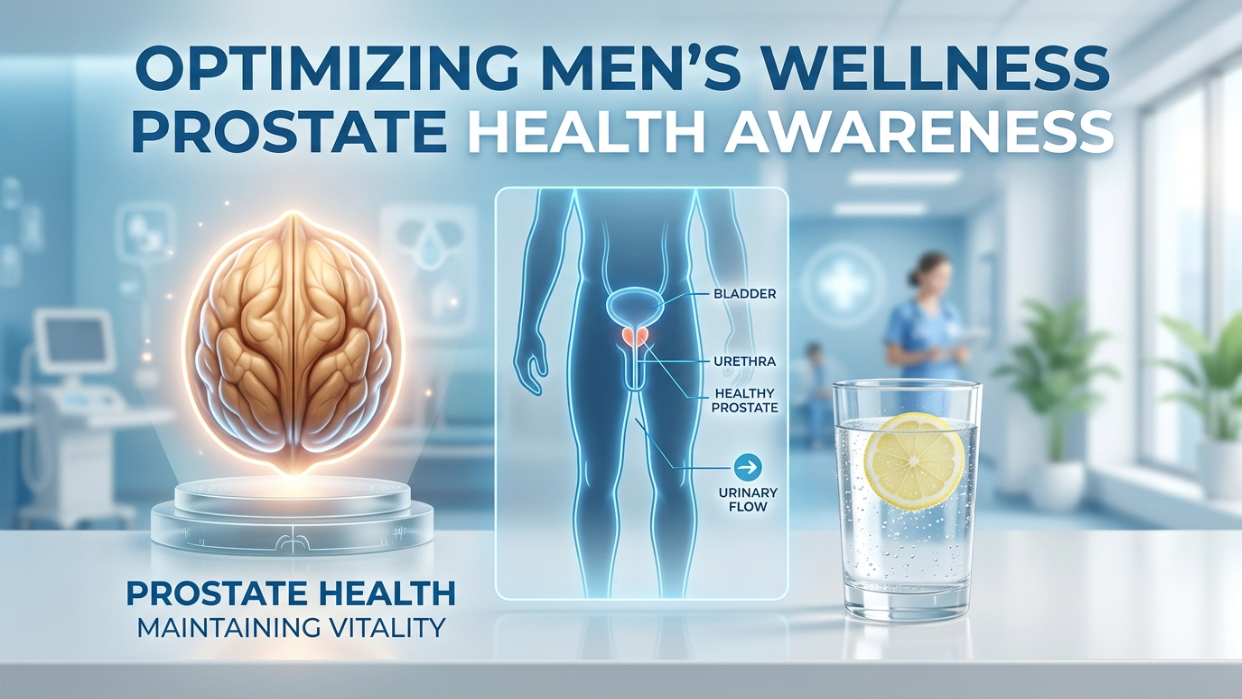
Ask a guy what’s happening inside his own body and mostly you get a shrug. Step count, bench numbers, maybe cholesterol if a doctor rattled him enough once. There’s a walnut-sized gland quietly running its own show for thirty, forty years. Nobody looks at it twice. Then one day it starts messing with sleep, or a road trip, or a meeting you can’t step out of.
Maybe that’s why you’re reading this — your doctor said the word “prostate” at your last visit, you nodded, and honestly had no idea what he meant. Fine. Big club. Nobody brings it up at a barbecue, but ten awkward minutes now beats a bathroom crisis later.
So. What the thing does. Why it grows as you age. And what’s actually worth doing about it, versus what’s just noise.
What Is the Prostate?
It’s part of the male reproductive system. In your twenties, thirties, it’s roughly walnut-sized. Sits there, does its job, causes zero drama.
Then it doesn’t stop growing, which is the weird part — basically every other organ finishes growing when you hit adulthood and stays put. Not this one. Slow, steady enlargement, year after year, and for most guys that’s just what aging does. The catch isn’t the growth itself. It’s where the gland happens to sit.
One thing worth saying up front: you didn’t cause this. Roughly half of men, maybe more, notice something shift by their fifties. It’s common to the point of being ordinary — the only real mistake is ignoring it for a decade.
Where Is the Prostate Located?
Low in the pelvis. Under the bladder, right in front of the rectum. Buried deep enough that you can’t see it and can’t really feel it either, no matter how you poke around.
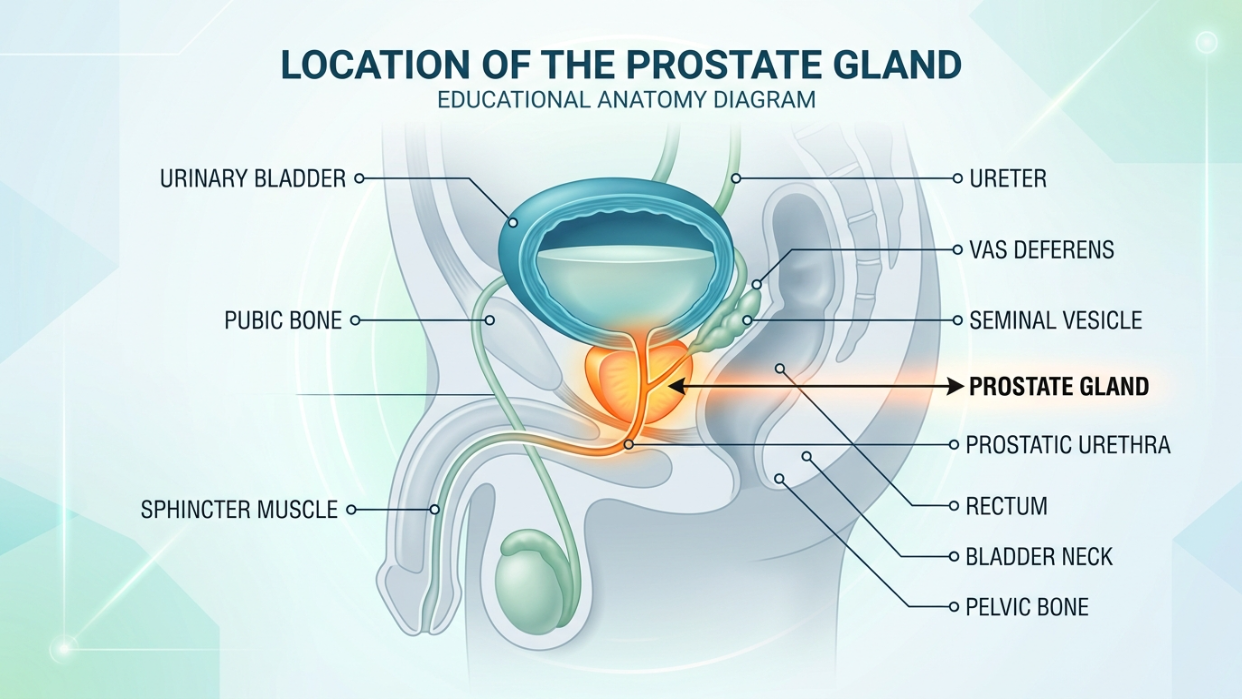
Here’s the piece that explains basically everything else in this article: the urethra runs straight through the center of the prostate, not around it. A hose through the middle of a donut, more or less. Swell the donut even a little and the hose gets pinched. That single fact is behind almost every urinary symptom men complain about once they hit their forties or fifties.
What Does the Prostate Do?
Funny thing — people assume it’s a urinary organ, mostly because it causes so many bathroom problems. It’s not. Its actual job is reproductive. It makes a fluid that gets mixed into semen, and that fluid is what gives sperm what they need to survive the trip.
It also doubles as a valve, sort of. During ejaculation the muscle tissue in the gland contracts to push fluid out, and in that same instant it seals off the bladder so urine can’t get involved. Small gland. Weirdly precise mechanics.
Why Is Prostate Health Important?
When it’s working the way it should, you literally never think about it. You sleep through the night. Four-hour drives happen without scanning for rest stops. Bathroom trips are boring, forgettable, over in thirty seconds. That’s the whole bar you’re aiming for.
Swell it, irritate it, and that ease is gone almost overnight. Pressure builds on the urethra and suddenly you’ve got a weak stream, a slow start, or that infuriating feeling five minutes later that you’re somehow not actually done.
Common Prostate Conditions
Most prostate trouble sorts into a small handful of categories. Worth knowing which is which, because jumping straight to worst-case-scenario over a slower stream helps nobody.
Real Stories from the Restroom
“I used to think waking up three times a night was just my new normal. Making a few basic adjustments to my evening routine and staying active completely changed my sleep quality.” — Mark T., 57
What Your Body Loves
- Lycopene-rich food, especially cooked tomatoes
- Regular movement — walking counts
- Routine checkups, even when nothing feels wrong
- Front-loading your water earlier in the day
What Adds Extra Pressure
- Late-night coffee or beer
- Long stretches sitting at a desk
- Ignoring symptoms and hoping they go away
- Ongoing, unmanaged stress
By a wide margin, the most common one is benign prostatic hyperplasia — BPH. The name sounds scarier than it is. “Benign” means exactly what it sounds like: not cancer. Just tissue thickening the way it does with age. Annoying, yes. Dangerous on its own, no.
Tips for Supporting Prostate Health
Nothing stops the clock, and no pill rewrites your genes. But the daily stuff compounds — genuinely, over years — so a handful of small changes actually pays off.
- Eat more color: tomatoes, watermelon, pink grapefruit. Cooked tomatoes especially — something about the lycopene in them and the prostate seems to get along.
- Swap the fats: less fried, greasy stuff, more omega-3s. Fish, walnuts, chia seeds — whatever’s easiest to actually keep eating.
- Move. Just move: no gym membership required. A daily half-hour walk keeps blood moving through the pelvis, which is most of what matters here.
- Manage evening fluids: drink plenty during the day, ease off after dinner, let the bladder actually rest while you sleep.
Frequently Asked Questions (FAQ)
Conclusion
None of this needs to be a source of anxiety. It’s just biology that catches up with most men eventually, and there’s no upside in waiting until it’s already wrecking your sleep to start paying attention. Notice the small changes. Keep your doctor in the loop instead of avoiding the topic. And treat the daily habits — the walking, the diet, the water timing — as an investment you’re making now, not damage control later.