Breathing Exercises Before Bed
Breathing Exercises Before Bed: How to Calm Your Mind Naturally
We have all experienced it: you lie down after a long, exhausting day, close your eyes, and suddenly your heart is pounding, and your mind is racing through a hundred different worries. For many adults over 40, turning off the physical stress response is the hardest part of falling asleep. When your brain perceives stress, it automatically speeds up your breathing, keeping you in a state of high alert. Fortunately, you can reverse this process entirely. By utilizing specific breathing exercises for sleep, you can manually override your body’s stress response, lower your heart rate, and gently guide yourself into deep, restorative rest.
What Are Breathing Exercises for Sleep?
Breathing exercises are structured patterns of inhaling and exhaling designed to trigger the parasympathetic nervous system—often called the “rest and digest” system. When you are stressed, you take shallow, rapid breaths from your chest. This tells your brain that you are in danger, halting the production of melatonin (the sleep hormone).
By intentionally slowing down your breath and drawing air deep into your belly, you send a powerful biological signal to your brain via the vagus nerve. This signal tells your brain that you are safe, causing your heart rate to drop, your blood pressure to lower, and your muscles to relax.
Main Causes of Nighttime Hyperarousal
Why do you need to actively control your breathing at night? As we age, our resilience to daily stress often fluctuates. Common causes of this nighttime “hyperarousal” include:
- Chronic Daytime Stress: Balancing careers, finances, and aging parents can leave you in a constant state of mild “fight or flight,” which does not automatically turn off when you get into bed.
- Hormonal Shifts: For women navigating menopause, fluctuating estrogen levels can trigger sudden anxiety, hot flashes, and a racing heart at night.
- Caffeine and Stimulants: Consuming coffee or tea late in the afternoon can artificially elevate your heart rate long after the sun goes down.
Common Symptoms of a Stressed Nervous System
If stress and shallow breathing are keeping you awake, your body will typically present these physical symptoms in bed:
- Feeling your heart thumping rapidly or heavily against your chest.
- Noticing that your breathing is shallow and restricted mostly to your upper chest.
- Holding tension in your jaw, neck, and shoulders.
- Experiencing a sudden flood of anxious thoughts the moment the room becomes quiet.
Risk Factors for Mature Adults
Ignoring evening stress carries significant risks as we cross into mid-life. Chronic sleep deprivation accelerates the aging process, weakens the immune system, and contributes to high blood pressure. Many older adults quickly turn to over-the-counter sleep aids or alcohol to force their bodies to shut down. However, these substances destroy the quality of your deep sleep and can lead to dangerous dependencies, making natural interventions like breathwork vital for long-term health.
Standard Treatment Options for Sleep Anxiety
When patients present with racing thoughts and anxiety-induced insomnia, medical professionals typically start with behavioral therapies. Cognitive Behavioral Therapy for Insomnia (CBT-I) is the gold standard for reframing sleep anxiety. Doctors also heavily emphasize good sleep hygiene and stress reduction techniques. Breathing exercises for sleep are universally recommended by sleep specialists because they are free, have zero side effects, and can be performed silently in bed.
The Top 3 Breathing Exercises For Sleep
If you want to transition from feeling wired to feeling tired in just a few minutes, try one of these three scientifically backed breathing techniques tonight:
| Technique | How to Perform It | Best Used For |
|---|---|---|
| 4-7-8 Breathing | Inhale for 4 seconds, hold for 7, exhale slowly for 8. | Rapidly lowering heart rate; acting as a “natural tranquilizer.” |
| Diaphragmatic (Belly) Breathing | Breathe deeply into the stomach so it rises, keeping the chest still. | Releasing physical muscle tension and general relaxation. |
| Box Breathing | Inhale for 4, hold for 4, exhale for 4, hold for 4. | Stopping a racing mind and distracting from anxious thoughts. |
1. The 4-7-8 Breathing Method
Pioneered by integrative medicine expert Dr. Andrew Weil, this is perhaps the most famous technique for sleep. The long exhale forces your heart rate to slow down. To do it: Exhale completely through your mouth. Close your mouth and inhale quietly through your nose for 4 seconds. Hold your breath for 7 seconds. Exhale completely through your mouth, making a gentle whoosh sound, for 8 seconds. Repeat this cycle four times.
2. Diaphragmatic (Belly) Breathing
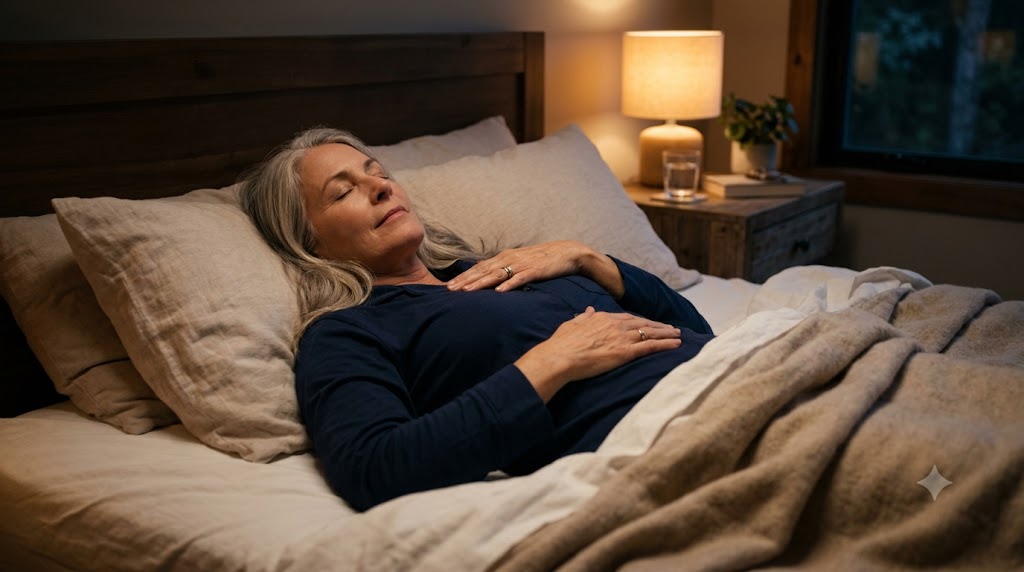
When we are anxious, we breathe shallowly into our chests. Belly breathing reverses this. Lie on your back with one hand on your chest and the other on your stomach. Inhale deeply through your nose, ensuring that the hand on your stomach rises, while the hand on your chest remains as still as possible. Exhale slowly through pursed lips. Focus entirely on the rising and falling of your stomach.
3. Box Breathing
Used by athletes and military personnel to stay calm under pressure, this technique requires just enough concentration to distract your brain from stressful thoughts. Simply visualize a square. Inhale for 4 seconds (going up one side of the square), hold your breath for 4 seconds (going across the top), exhale for 4 seconds (going down the other side), and hold your lungs empty for 4 seconds (going across the bottom). Repeat the cycle.
Vital Lifestyle Changes to Support Breathwork
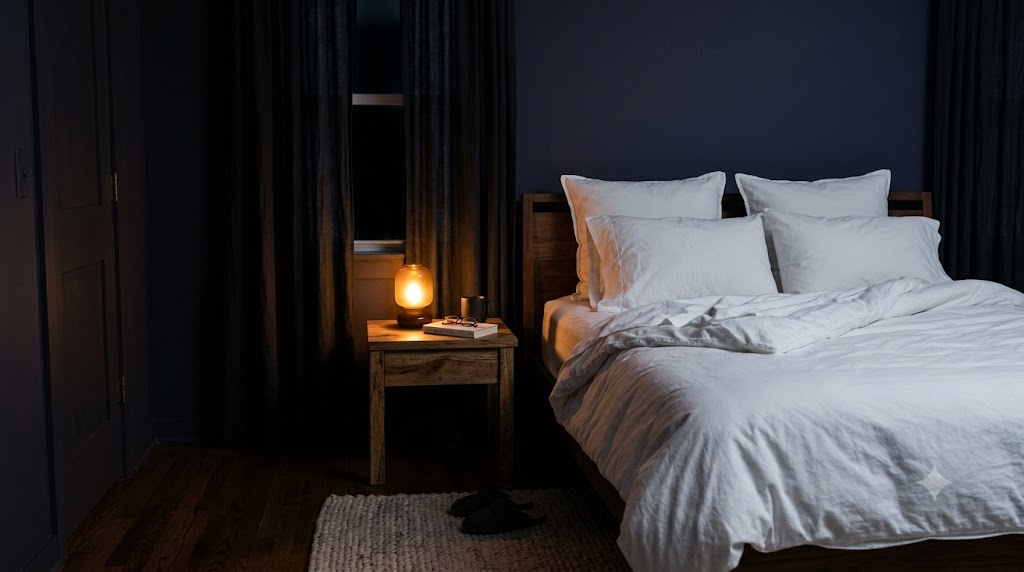
Breathing exercises work best when your environment is already primed for sleep. Before starting your breathwork, ensure your bedroom is completely dark and cool (around 65°F). Most importantly, you must implement a “Digital Sunset.” Turn off all blue-light-emitting screens (phones, TVs, tablets) at least 60 minutes before bed, as blue light suppresses melatonin and makes it physically harder to relax.
When To Seek Medical Advice
While breathing techniques are incredibly effective for stress, they cannot cure mechanical sleep disorders. If you practice these methods consistently but frequently wake up gasping for air, choking, or if your partner complains about loud, disruptive snoring, please consult a physician. These are hallmark signs of obstructive sleep apnea, a serious medical condition that requires a clinical sleep study and professional treatment.
Natural Support For Better Sleep
In addition to practicing deep breathing and maintaining excellent sleep hygiene, many individuals find that natural dietary support helps signal to the body that it is time to rest. This might include drinking a warm cup of caffeine-free herbal tea, practicing gentle stretching, or utilizing natural targeted formulations.
For those looking for an extra layer of consistency, high-quality botanical and mineral blends can be a practical option to explore alongside behavioral changes. Products like Sleep Revive are designed to complement healthy lifestyle habits by providing a blend of traditional ingredients aimed at supporting overall relaxation. When choosing any supplement, it is always best to review the ingredients with a healthcare provider to ensure it aligns safely with your personal health profile.
Frequently Asked Questions
Should I breathe through my nose or my mouth for sleep?
You should almost always inhale through your nose. Your nasal passages filter, warm, and humidify the air, and nasal breathing naturally produces nitric oxide, which helps widen blood vessels and lower blood pressure. Exhaling can be done through either the nose or the mouth, depending on the specific exercise you are using.
Can I use breathing exercises if I wake up in the middle of the night?
Absolutely. In fact, they are perfect for middle-of-the-night insomnia because they don’t require turning on a light or getting out of bed. If you wake up at 3:00 AM with racing thoughts, immediately begin the 4-7-8 breathing method to gently guide your nervous system back into a state of sleep.
What if holding my breath makes me feel more anxious?
If techniques like the 4-7-8 method or Box Breathing cause you to feel short of breath or anxious, simply stop holding your breath. Instead, switch to basic Diaphragmatic Breathing. The only rule you need to follow to trigger relaxation is to make sure your exhales are slightly longer than your inhales.
Conclusion
You have the power to control your body’s stress response; the control panel is simply your breath. By intentionally slowing down your breathing and focusing on deep, belly-driven inhales, you can halt the release of stress hormones and clear the path for restful sleep. Make these simple breathing exercises for sleep a core part of your nightly routine, and you will find it much easier to transition from a busy day to a peaceful, restorative night.