
Meditation For Sleep
Meditation For Sleep: How to Quiet Your Racing Mind
You have done everything right. You turned off the television, brushed your teeth, and got into bed at a reasonable hour. But the moment you turn off the light, your brain suddenly switches into high gear. You start worrying about your finances, your adult children, or the chores you forgot to do. For many adults between the ages of 40 and 70, a racing mind is the single biggest barrier to a good night’s rest. If you want a natural way to break this stressful cycle without relying on pills, practicing meditation for sleep is one of the most effective, scientifically backed tools available.
What Is Meditation for Sleep?
Using meditation for sleep does not require you to sit cross-legged on the floor or chant for hours. In the context of insomnia, meditation simply refers to a set of mental exercises designed to guide your brain out of a state of stress (the sympathetic nervous system) and into a state of deep relaxation (the parasympathetic nervous system).
By focusing your attention on your breathing, specific muscle groups, or a calming visualization, you physically lower your heart rate. This drop in physical arousal signals your brain that it is safe to release melatonin, allowing you to drift off naturally.
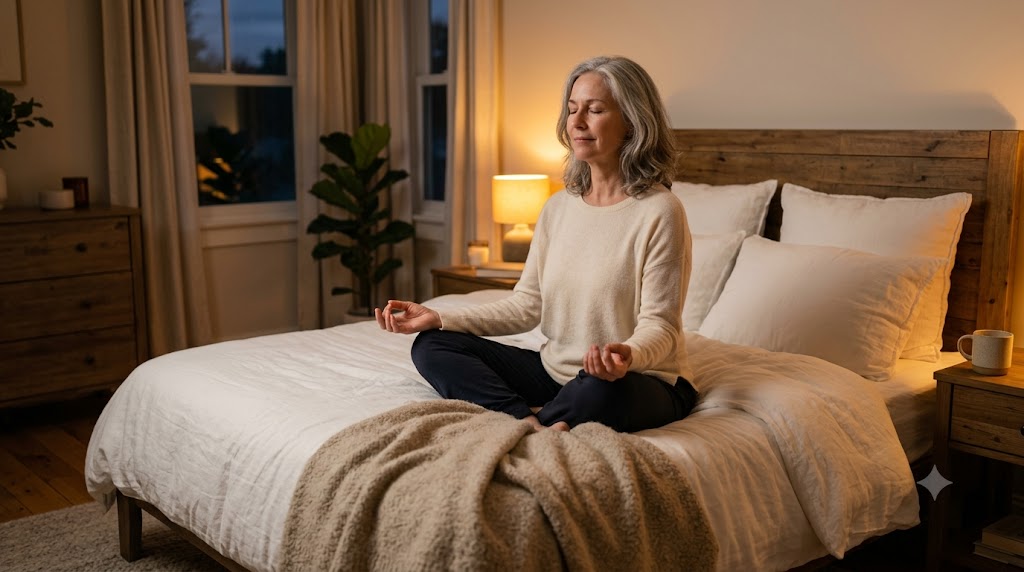
Main Causes of Evening Mental Overactivity
Before using meditation to quiet your mind, it helps to understand why it is racing in the first place. For mature adults, a hyperactive mind at bedtime is usually driven by:
- High Cortisol Levels: Unresolved daily stress keeps the stress hormone cortisol elevated, which acts as a powerful wakefulness signal to the brain.
- Conditioned Arousal: If you regularly worry while lying in bed, your brain starts to subconsciously associate your mattress with anxiety rather than sleep.
- Blue Light Exposure: Scrolling through negative news or emails on a smartphone right before bed triggers a “fight or flight” response.
Common Symptoms of a Racing Mind
If stress is the root cause of your sleep issues, your body will typically show these common signs:
- Feeling physically exhausted, but mentally “wired” and unable to shut off your thoughts.
- Waking up abruptly at 3:00 AM and immediately remembering stressful obligations.
- Experiencing a slightly elevated heart rate or shallow, rapid breathing when lying in the dark.
- Holding tension in your jaw, neck, or shoulders without realizing it.
Risk Factors for Mature Adults
As we cross into mid-life, our natural stress resilience can fluctuate due to shifting hormones, such as declining estrogen and testosterone. When combined with the heavy responsibilities of managing careers, aging parents, and personal health, chronic stress can easily take root. Ignoring this stress increases the risk of chronic insomnia, which in turn accelerates aging, weakens the immune system, and negatively impacts cardiovascular health.
Standard Treatment Options for Sleep Anxiety
When patients report anxiety-driven insomnia, medical professionals typically suggest a stepped approach. The gold standard is Cognitive Behavioral Therapy for Insomnia (CBT-I), which helps reframe negative thoughts about sleep. Doctors also heavily emphasize sleep hygiene (maintaining a cool, dark room) and relaxation techniques. While prescription sleep aids may be used for short-term relief, they do not cure the underlying stress, making mindfulness a vital long-term strategy.
Top Natural Techniques: How to Meditate in Bed
You can perform these techniques while lying down in bed, just as you are trying to fall asleep. Here are three highly effective methods:
| Meditation Technique | How It Works | Best For |
|---|---|---|
| The Body Scan | Mentally scanning your body from toes to head, consciously relaxing each muscle group. | Physical tension, jaw clenching, and restless legs. |
| Mindful Breathing | Focusing entirely on the sensation of air entering and leaving your nostrils. | Racing thoughts and general anxiety. |
| Guided Visualization | Listening to an audio recording that walks you through a peaceful, imaginary landscape. | Distracting a highly active imagination. |
1. The Body Scan Meditation
Lie on your back with your eyes closed. Bring your full attention to your toes. Notice any tension there, take a deep breath, and as you exhale, imagine the tension melting away. Slowly move your attention up to your calves, your knees, your thighs, and your abdomen, repeating the process. By the time you reach your neck and face, your body will feel heavy, relaxed, and ready for sleep.
2. The 4-7-8 Breathing Method
While not strictly traditional meditation, this rhythmic breathing acts as a natural tranquilizer. Inhale quietly through your nose for 4 seconds, hold your breath for 7 seconds, and exhale completely through your mouth for 8 seconds. Repeat this cycle four times to quickly lower your heart rate.
3. Guided Audio Meditation
If you find that sitting in silence only makes your thoughts louder, you are not alone. Many older adults find success using free smartphone apps or podcasts that feature “Sleep Stories” or guided relaxation. Having a soothing voice tell you a calm story gives your brain a gentle distraction, preventing it from spiraling into stressful thoughts.

Vital Lifestyle Changes to Support Your Practice
Practicing meditation for sleep is much more effective if your environment supports relaxation. First, implement a “Digital Sunset”—turn off all screens at least an hour before bed. Second, keep your bedroom temperature cool, ideally between 60°F and 67°F (15°C to 19°C). Finally, write down a “brain dump” list of tomorrow’s tasks before you get into bed, so your brain does not feel responsible for remembering them while you meditate.
When To Seek Medical Advice
While meditation is a powerful tool for stress-induced wakefulness, it cannot cure physical medical disorders. If you meditate consistently for several weeks and still struggle to sleep, or if you frequently wake up gasping for air and snoring loudly, you must consult a doctor. These physical symptoms may point to obstructive sleep apnea, a condition that requires clinical evaluation.
Natural Support For Better Sleep
In addition to practicing mindfulness and establishing a soothing evening ritual, many individuals find that natural dietary support helps signal to the body that it is time to rest. This might include drinking a warm cup of caffeine-free herbal tea, practicing gentle stretching, or utilizing natural targeted formulations.
For those looking for an extra layer of consistency, high-quality botanical and mineral blends can be a practical option to explore alongside behavioral changes. Products like Sleep Revive are designed to complement healthy lifestyle habits by providing a blend of traditional ingredients aimed at supporting overall relaxation. When choosing any supplement, it is always best to review the ingredients with a healthcare provider to ensure it aligns safely with your personal health profile.
Frequently Asked Questions
What if my mind wanders while I try to meditate?
Mind-wandering is completely normal and happens to everyone! The goal of meditation is not to force your mind to go perfectly blank. When you notice you are thinking about tomorrow’s errands, simply acknowledge the thought without frustration, and gently bring your focus back to your breathing. It is the act of returning your focus that trains the brain to relax.
How long does it take for meditation to improve my sleep?
Some people feel immediate physical relaxation the very first time they try a body scan. However, reshaping how your brain responds to nighttime stress takes consistency. If you practice a 10-minute meditation every night, you will typically see noticeable improvements in your ability to fall asleep within two to four weeks.
Do I have to sit up to meditate before bed?
Not at all. In fact, for sleep meditation, it is highly recommended that you practice lying down in your bed. Get under the covers, turn off the lights, and get as comfortable as possible. That way, if you accidentally fall asleep mid-meditation, you are already exactly where you need to be.
Conclusion
Reclaiming your sleep as a mature adult often requires finding a way to safely disconnect from the stresses of the day. By using meditation for sleep, you are actively choosing to turn down the volume of your racing thoughts. Whether you prefer a relaxing body scan, mindful breathing, or listening to a guided audio track, taking just 10 minutes to quiet your mind can dramatically transform your restless nights into deep, restorative sleep.