
Sleep Hygiene Checklist
Sleep Hygiene Checklist: The Ultimate Guide for Better Rest
Think about the last time you had a truly incredible, uninterrupted night of sleep. Chances are, it didn’t just happen by accident. Just as dental hygiene protects your teeth, sleep hygiene protects your brain’s ability to shut down and recover. For adults in their 40s, 50s, and beyond, ignoring these daily habits often leads to chronic exhaustion, racing midnight thoughts, and early morning wakefulness. If you are tired of tossing and turning, it is time to audit your daily routines. In this guide, we will provide a comprehensive, step-by-step sleep hygiene checklist to help you reclaim your nights.
What Is Sleep Hygiene?
In the medical field, sleep hygiene refers to a specific set of daily behaviors, dietary choices, and environmental setups that either promote or destroy your sleep quality. It operates on a simple biological principle: your brain relies on external cues (like light, temperature, and routine) to know when to produce wakeful hormones (cortisol) and when to produce sleep hormones (melatonin).
Good sleep hygiene aligns your lifestyle with your body’s natural circadian rhythm. When your habits are out of sync with this internal clock, falling asleep becomes a daily struggle.
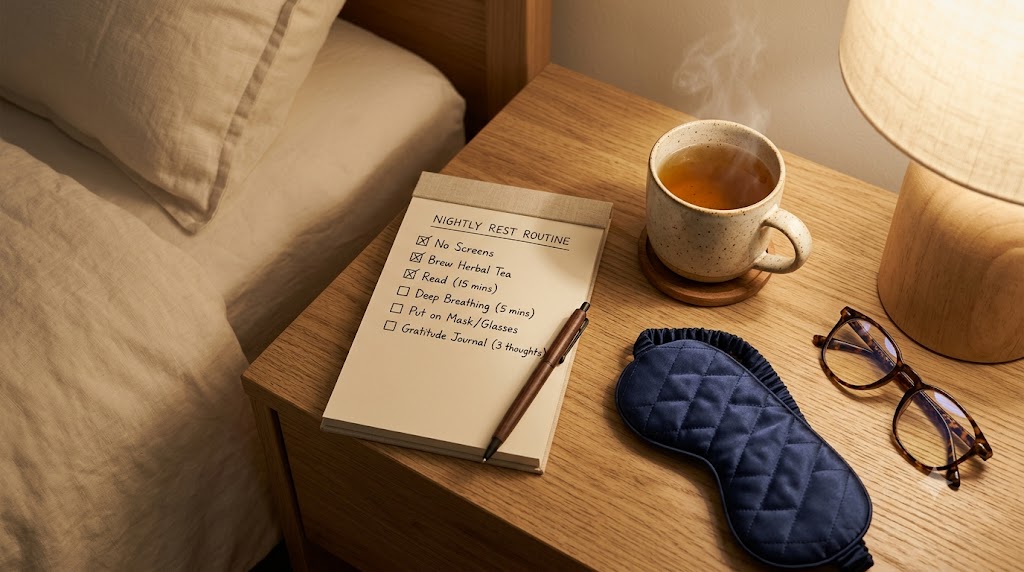
Main Causes of Poor Sleep Habits
It is incredibly easy to develop bad sleep hygiene in our modern world. Most sleep issues in mid-life are driven by a gradual accumulation of small, seemingly harmless habits:
- Inconsistent Schedules: Waking up at 6:00 AM for work during the week, but sleeping in until 9:00 AM on the weekends, throws your biological clock into a state of permanent “social jetlag.”
- Subconscious Stress Loops: Bringing laptops or work documents into bed teaches your brain that the mattress is a place for problem-solving, not resting.
- Late-Day Stimulants: Consuming hidden caffeine in afternoon sodas, teas, or chocolate, which can take up to 8 hours to fully clear from your system.
Common Symptoms of Poor Sleep Hygiene
How do you know if your habits are to blame for your exhaustion? The symptoms of poor sleep hygiene are distinct:
- Taking longer than 30 minutes to fall asleep, even when you feel physically tired.
- Waking up repeatedly throughout the night and feeling wide awake immediately.
- Relying heavily on alcohol to “wind down” or on sleeping pills to knock yourself out.
- Experiencing severe grogginess (sleep inertia) that lasts for hours after waking up.
Risk Factors for Mature Adults
As we age, our sleep architecture becomes more fragile. The deep, restorative stages of sleep (Slow-Wave Sleep) naturally decrease as we pass age 40. Furthermore, adults frequently deal with joint pain, frequent urination, and hormonal shifts (like menopause). Because the physical hurdles to sleeping are already higher, mature adults simply cannot afford to have poor sleep hygiene. Bad habits that you could bounce back from in your 20s will now severely disrupt your health and energy levels.
The Ultimate Sleep Hygiene Checklist
Fixing your sleep does not start when you get into bed; it starts the moment you wake up. Use the following checklist to audit your daily routine. Aim to check off as many of these habits as possible every single day.
Phase 1: Daytime Habits (Morning to Afternoon)
- Consistent Wake Time: Did I wake up at the exact same time today as I did yesterday (within 30 minutes)?
- Morning Sunlight: Did I expose my eyes to bright, natural daylight within the first hour of waking up to set my circadian rhythm?
- Caffeine Curfew: Did I stop consuming all caffeine (coffee, tea, soda) by 2:00 PM?
- Physical Activity: Did I engage in at least 30 minutes of physical activity or walking, ensuring I finished any vigorous workouts at least 3 hours before bed?
- Nap Control: If I napped today, did I keep it under 30 minutes and finish it before 3:00 PM?
Phase 2: Evening Wind-Down (2 Hours Before Bed)
- Heavy Meal Curfew: Did I finish my last large meal at least 2 to 3 hours ago to prevent indigestion and heartburn?
- Alcohol Avoidance: Did I avoid using alcohol as a sleep aid, knowing it destroys deep REM sleep?
- The Digital Sunset: Did I turn off my phone, tablet, and TV at least 60 minutes before getting into bed?
- Brain Dumping: Did I write down my worries or tomorrow’s to-do list on a piece of paper so my brain doesn’t have to dwell on them?
- Relaxation Ritual: Did I do a relaxing activity (reading a book, gentle stretching, taking a warm bath) to lower my heart rate?
Phase 3: The Bedroom Environment
- Optimal Temperature: Is my bedroom thermostat set to a cool 60°F to 67°F (15°C – 19°C)?
- Total Darkness: Have I blocked out all streetlights with blackout curtains and covered any glowing LEDs on electronics?
- Sound Control: Am I using a white noise machine, a fan, or earplugs to block out sudden, disruptive noises?
- Bed Association: Am I using my bed strictly for sleep and intimacy (no working, arguing, or watching TV)?

Natural Remedies to Support Good Hygiene
Good habits lay the foundation, but sometimes your nervous system needs a little extra help to calm down. Pairing your checklist with natural support can yield incredible results. Consider adding magnesium-rich foods (like almonds and pumpkin seeds) to your afternoon snacks, or drinking a small cup of chamomile tea during your evening wind-down phase. These gentle, natural interventions work in perfect harmony with a strict hygiene routine to quiet a racing mind.
When To Seek Medical Advice
Good sleep hygiene cures bad habits, but it cannot cure medical conditions. If you have strictly followed this checklist for four to six weeks and still suffer from chronic insomnia, it is time to see a doctor. You should also seek immediate medical attention if you or your partner notice loud snoring, choking, or gasping sounds during the night, as these are primary indicators of obstructive sleep apnea.
Natural Support For Better Sleep
In addition to optimizing your bedroom and strictly following your daily hygiene checklist, many individuals find that natural dietary support helps signal to the body that it is time to rest. This might include drinking a warm cup of caffeine-free herbal tea, practicing gentle stretching, or utilizing natural targeted formulations.
For those looking for an extra layer of consistency, high-quality botanical and mineral blends can be a practical option to explore alongside behavioral changes. Products like Sleep Revive are designed to complement healthy lifestyle habits by providing a blend of traditional ingredients aimed at supporting overall relaxation. When choosing any supplement, it is always best to review the ingredients with a healthcare provider to ensure it aligns safely with your personal health profile.
Frequently Asked Questions
What should I do if I wake up in the middle of the night?
A crucial rule of sleep hygiene is avoiding frustration in bed. If you wake up and cannot fall back asleep within 20 minutes, do not lie there watching the clock. Get out of bed, move to a dimly lit room, and do a quiet activity (like reading a boring book) until you feel genuinely sleepy again. Then, return to bed.
Does sleeping in on the weekends help me “catch up” on sleep?
No, this is a myth. Sleeping in for several extra hours on Saturday and Sunday disrupts your circadian rhythm, creating a phenomenon called “social jetlag.” This makes it incredibly difficult to fall asleep on Sunday night and leaves you feeling exhausted on Monday morning. Try to keep your wake time within a 30-minute window every day of the week.
Are daytime naps bad for sleep hygiene?
Naps are not inherently bad, but they must be controlled. If you need a nap to get through the day, keep it short (20 to 30 minutes) and take it before 3:00 PM. Long or late-afternoon naps will diminish your “sleep drive,” making it much harder to fall asleep at your proper bedtime.
Conclusion
Great sleep is rarely an accident; it is the result of intentional, consistent choices made throughout the day. By auditing your habits with this sleep hygiene checklist, you are taking proactive steps to respect your body’s natural biological clock. Commit to making a few small changes this week—like enforcing a caffeine curfew and cooling down your room—and you will soon discover that deep, restorative rest is entirely within your control.