
How To Fall Asleep In 10 Minutes
How To Fall Asleep In 10 Minutes: The Ultimate Guide
There are few things more exhausting than lying in the dark, watching the clock tick by, and desperately calculating how many hours of sleep you have left if you manage to drift off right now. As we enter our 40s, 50s, and beyond, the effortless sleep of our youth often gives way to racing thoughts and physical restlessness. But what if you could train your brain to power down on command? If you want to learn how to fall asleep fast, you do not need expensive gadgets or heavy medications. By utilizing proven, science-backed relaxation techniques, you can successfully cue your nervous system to shut down in 10 minutes or less.
What Does It Mean to Fall Asleep Fast?
In sleep medicine, the time it takes you to transition from full wakefulness to sleep is called “sleep latency.” For a healthy adult, a normal sleep latency is between 10 and 20 minutes. If you fall asleep the very second your head hits the pillow, you are likely severely sleep-deprived. Conversely, if it takes you more than 30 minutes to drift off, you are experiencing sleep onset insomnia.
Learning to fall asleep fast means bringing your sleep latency down to that optimal 10-to-15-minute window by actively turning off your body’s stress response.
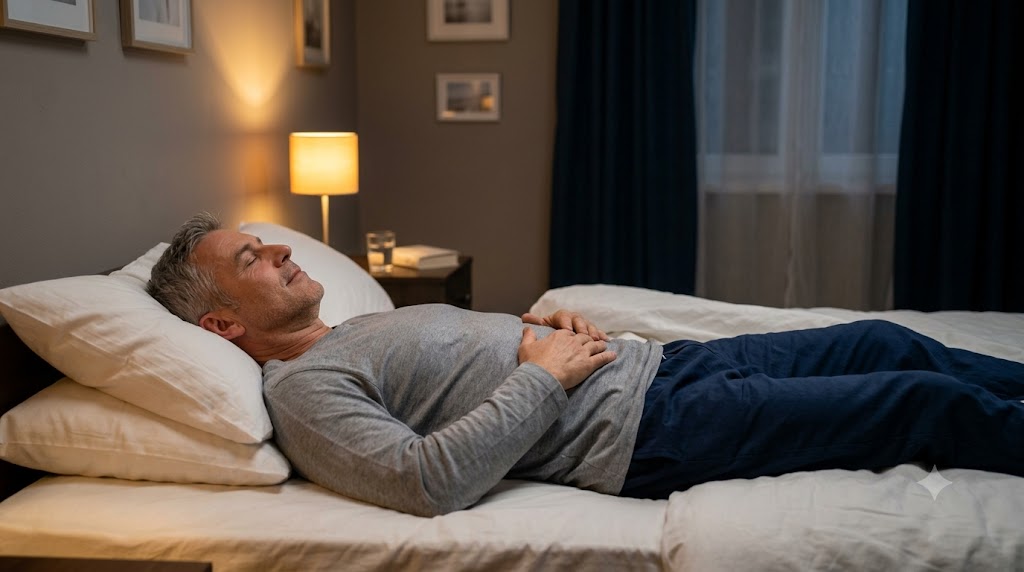
Main Causes of Sleep Onset Delay
Why is your brain refusing to shut down? For adults in mid-life, difficulty falling asleep is usually caused by an overactive nervous system. Common triggers include:
- High Evening Cortisol: Stress from work, finances, or family keeps cortisol levels high, which directly blocks the release of sleep-inducing melatonin.
- Physical Tension: Holding subconscious tension in your jaw, neck, and shoulders sends warning signals to your brain that it is not safe to sleep yet.
- Sleep Anxiety: The fear of not being able to sleep actually causes an adrenaline spike, creating a vicious cycle of wakefulness.
Common Symptoms of Sleep Anxiety
When you are struggling to initiate sleep, you will likely notice a distinct pattern of behaviors and physical sensations:
- Constantly checking the clock or your phone to see what time it is.
- Tossing and turning, unable to find a comfortable physical position for more than a few minutes.
- Experiencing a racing heart or shallow breathing when you lie down in the dark.
- A sudden flood of “to-do” lists, regrets, or random thoughts the moment the room gets quiet.
Risk Factors for Mature Adults
As we age, our circadian rhythm (our internal clock) naturally shifts, often making us feel sleepy earlier in the evening and waking us up earlier in the morning. If you try to fight this natural shift—by staying up late to watch TV or finishing chores—you can easily push past your ideal “sleep window.” When this happens, your body releases a surge of cortisol to keep you awake, resulting in a frustrating “second wind” that makes falling asleep extremely difficult.
3 Proven Techniques to Fall Asleep Fast
If you want to bypass a racing mind, you have to give your brain a physical task that forces it to relax. Here are three of the most effective, research-backed methods to help you fall asleep fast.
| Technique | How It Works | Best For |
|---|---|---|
| The Military Method | Systematically relaxes every muscle group from head to toe, combined with visualization. | Overall physical tension and general insomnia. |
| 4-7-8 Breathing | Forces the heart rate to slow down, activating the parasympathetic (calming) nervous system. | Racing heartbeats, sleep anxiety, and stress. |
| Paradoxical Intention | A psychological trick where you actively try to stay awake, removing the performance anxiety of sleeping. | Severe frustration and clock-watching. |
1. The Military Method
Developed by the U.S. Navy Pre-Flight School to help pilots fall asleep in under two minutes regardless of their environment, this method requires practice but is incredibly effective:
- Relax your entire face, including the muscles inside your mouth and your jaw.
- Drop your shoulders to release tension, and let your hands drop to the side of your body.
- Exhale deeply, relaxing your chest.
- Relax your legs, thighs, and calves.
- Clear your mind for 10 seconds by imagining a relaxing scene (like lying in a canoe on a calm lake). If your mind wanders, repeat the words “don’t think” in your head for 10 seconds.
2. The 4-7-8 Breathing Technique
Pioneered by integrative medicine experts, this breathing pattern acts as a natural tranquilizer for the nervous system:
- Inhale quietly through your nose for 4 seconds.
- Hold your breath for 7 seconds.
- Exhale completely through your mouth, making a whoosh sound, for 8 seconds.
- Repeat this cycle four times.
3. Paradoxical Intention
If you are stressed about not sleeping, your brain produces adrenaline. Paradoxical intention involves getting into bed, keeping your eyes open, and telling yourself, “I am going to stay awake for a few more minutes.” By removing the intense pressure and demand to fall asleep immediately, the sleep anxiety vanishes, and sleep often follows rapidly.
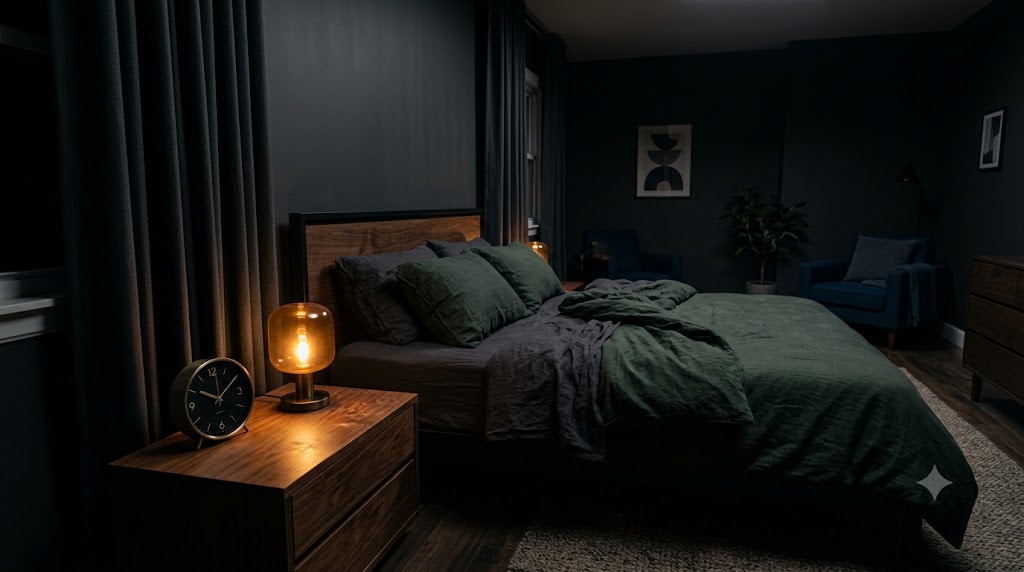
Essential Lifestyle Changes
These 10-minute techniques only work if your environment supports them. To guarantee success, ensure your bedroom temperature is set between 60°F and 67°F, as your core body temperature must drop to initiate sleep. Additionally, turn off all screens and dim the lights at least one hour before using these methods to ensure your natural melatonin levels are high.
When To Seek Medical Advice
If you practice these relaxation techniques consistently for several weeks and still spend hours staring at the ceiling, it is time to consult a doctor. Chronic sleep onset insomnia can occasionally be a symptom of underlying issues such as thyroid imbalances, restless legs syndrome, or severe clinical anxiety that requires professional medical evaluation.
Natural Support For Better Sleep
In addition to practicing deep breathing and relaxation techniques, many individuals find that natural dietary support helps signal to the body that it is time to rest. This might include drinking a warm cup of caffeine-free herbal tea, practicing gentle stretching, or utilizing natural targeted formulations.
For those looking for an extra layer of consistency, high-quality botanical and mineral blends can be a practical option to explore alongside behavioral changes. Products like Sleep Revive are designed to complement healthy lifestyle habits by providing a blend of traditional ingredients aimed at supporting overall relaxation. When choosing any supplement, it is always best to review the ingredients with a healthcare provider to ensure it aligns safely with your personal health profile.
Frequently Asked Questions
What should I do if the 10-minute techniques don’t work?
If you have been lying in bed for more than 20 minutes and feel wide awake or frustrated, get out of bed. Go to a dimly lit room and do something boring or calming—like reading a physical book or folding laundry—until your eyelids feel heavy. Then, return to bed. This prevents your brain from associating your mattress with stress.
Does counting sheep actually help you fall asleep?
Surprisingly, no. Studies show that counting sheep is often too boring to keep your brain from wandering back to stressful thoughts. Instead, try a cognitive distraction task that requires a bit more focus, such as counting backward from 100 by threes (100, 97, 94…). This occupies the brain’s logic center just enough to block out anxiety.
Why do I feel sleepy on the couch but wake up when I get into bed?
This is a classic sign of conditioned arousal. Over time, if you have struggled with sleep in your bed, your brain starts to subconsciously view the bed as a stressful environment. Getting out of bed when you can’t sleep, and strictly avoiding phones or TV while in bed, will help retrain your brain to associate the mattress exclusively with relaxation.
Conclusion
Learning how to fall asleep fast is a skill, and like any skill, it takes a little bit of practice. By understanding that a racing mind is just a sign of an overactive nervous system, you can use powerful tools like the Military Method or 4-7-8 breathing to take back control. Combine these techniques with a cool, dark room and a consistent routine, and you will soon turn your bedtime from a nightly battle into a peaceful, deeply restorative experience.