
Best Exercises for Joint Health
Best Exercises for Joint Health: Moving Pain-Free After 40
Introduction
When joint stiffness sets in and minor aches begin to complicate your daily routine, the most intuitive response is often to stop moving. We tend to treat our aching knees, hips, and lower backs like fragile porcelain, fearing that physical activity will further grind down our remaining cartilage. For decades, traditional advice echoed this sentiment: “If it hurts, rest it.”
However, modern sports medicine and joint biology have completely overturned this static paradigm. Your joints are not fixed mechanical parts; they are living, dynamic tissues that thrive on movement. In fact, absolute rest is a form of biological starvation for your cartilage. To keep your joints functional, resilient, and pain-free as you navigate your 40s and beyond, you must participate in deliberate, joint-safe exercise protocols.
In this guide for Wellness Vital Zone, we will explore the precise exercise modalities that optimize joint lubrication, strengthen supporting structural tissues, and keep you moving with fluid confidence.
The Biomechanical Rationale: Motion is Lotion
To understand why exercise cures joint stiffness, we must look inside the joint capsule. Articular cartilage—the smooth, slippery tissue covering the ends of your bones—possesses zero direct blood supply. Unlike your muscles or skin, it cannot draw oxygen and nutrients directly from your bloodstream to heal itself.
Instead, cartilage relies entirely on a process called intermittent mechanical loading. When you compress a joint through movement, waste products are squeezed out of the cartilage matrix. When you release that pressure, fresh, nutrient-dense synovial fluid is sucked back in. Physical movement is the literal pump that feeds your joints. Without it, your synovial fluid becomes stagnant, thin, and loses its cushioning properties, accelerating cellular decay.
3 Essential Exercise Modalities for Joint Longevity
A comprehensive joint-protection routine bypasses high-impact pounding and focuses instead on structural stability, fluid circulation, and full ranges of motion.
1. Low-Impact Aerobic Conditioning
High-impact activities like running on asphalt generate ground reaction forces up to three times your body weight, which can aggravate already sensitive joints. Low-impact cardio offers the exact same cardiovascular and fluid-pumping benefits without the destructive structural trauma.
The Best Options: Cycling, swimming, elliptical training, and brisk walking. Cycling is particularly powerful for knee health because the smooth, continuous circular motion gently pumps synovial fluid through the knee capsule while the bike seat supports the vast majority of your body weight.

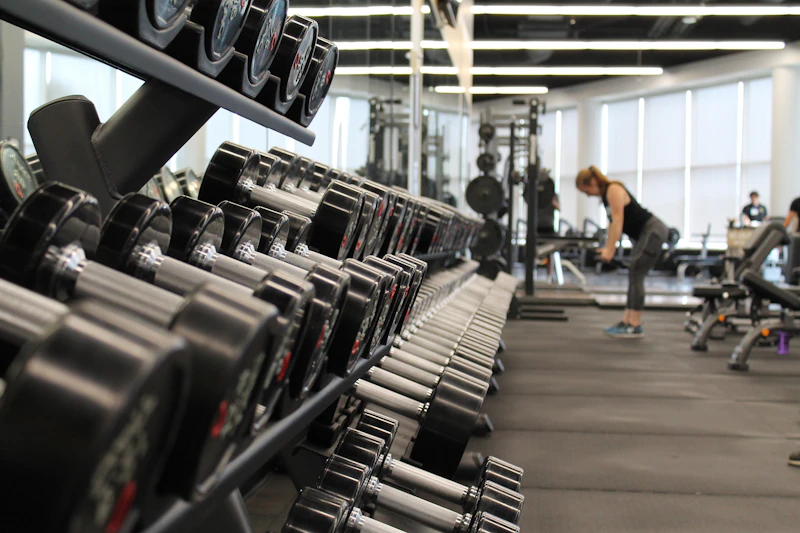
2. Progressive Resistance Training (Strength Training)
Many people believe strength training damages joints, but when performed with proper form, it is the ultimate insurance policy against joint degeneration. Bones do not float in isolation; they are held together by a network of muscles. If your muscles are weak, your skeletal hinges absorb 100% of the mechanical shock of every step you take.
By building strong quadriceps, hamstrings, and glutes, you create a biological shock-absorption system. Stronger muscles actively decompress the joint space, taking the physical pressure off worn cartilage.
The Protocol: Focus on controlled, multi-joint movements like goblet squats, glute bridges, and Romanian deadlifts. Prioritize lifting moderate weights through a pain-free range of motion, emphasizing a slow tempo (3 seconds on the way down) to maximize muscle recruitment while minimizing tendon stress.
3. Controlled Mobility Work and Dynamic Flexibility
Static stretching (holding a stretch for 30 seconds) has its place, but it does not prepare a joint for active life. To prevent midlife stiffness, you must perform mobility exercises that take your joints through their full, anatomically designed ranges of motion.
The Protocol: Incorporate disciplines like Yoga, Tai Chi, or specific CARs (Controlled Articular Rotations). Moving a joint through its complete outer boundaries breaks up microscopic adhesions in the surrounding ligaments and signals the body to maintain structural elasticity.

Golden Rules for Waking Up Stiff Joints Safely
To ensure your active routine protects your joints rather than aggravating them, always implement these safety guardrails:
- The 10-Minute Warm-Up Rule: Never load a cold joint. Spend at least 10 minutes performing unweighted movements (like arm circles, bodyweight hinges, or light walking) to change the viscosity of your synovial fluid from thick gel to a slick, slippery lubricant before adding any resistance.
- Deciphering Pain Signals: Learn to differentiate between *productive discomfort* (muscle burning, cardiovascular challenge) and *structural pain* (sharp, stabbing, pinpoint sensations inside a joint). If a movement causes structural pain, stop immediately and regress the exercise.
- Consistency Over Intensity: Your joints respond much better to 20 minutes of daily low-impact movement than a grueling, two-hour gym session once a week that leaves you inflamed for days.
Conclusion
Your joints are biologically designed to last a lifetime, but they require the stimulus of movement to remain healthy. Resting away midlife stiffness only accelerates cartilage dehydration and muscle atrophy. By balancing low-impact conditioning to circulate fluid, strength training to build muscular armor, and mobility work to maintain flexibility, you can actively reverse age-related structural decay. Move often, move mindfully, and let movement be your primary medicine for lifelong skeletal vitality.
Medical Disclaimer
Disclaimer: The information provided in this article by Wellness Vital Zone is for educational and informational purposes only and is not intended as medical advice, diagnosis, or treatment. If you have advanced bone-on-bone osteoarthritis, a history of joint replacement, or an acute joint injury, consult with your physical therapist or orthopedic physician before starting a new exercise program.